


Ask ten people what drives human migration and you will get ten answers, most of them shaped by whatever happened to be on the news that week. The reality is quieter. Most people who move are not fleeing a catastrophe. They are following a job, a spouse, a university place or a slightly better version of the life they already had in mind. The gap between that reality and the public conversation is where most of the confusion lives, and closing it takes very little more than a clear look at how people actually move.
A definition wider than the headlines
Human migration simply means moving from one place to another with the intention of settling, temporarily or permanently. That covers a Nigerian nurse taking a contract in Manchester, a Polish family returning to Krakow after fifteen years in Chicago, and a farmer in Bihar moving to Delhi for construction work. It also covers the student who never goes home. The International Organization for Migration keeps a useful plain-language guide to migration terms, and reading it is a quick cure for a lot of loose language.
Push and pull factors never work alone
The classic model splits the causes of movement into things that push people out of a place and things that pull them toward another. Drought, unemployment, insecurity and poor schools push. Wages, safety, family and opportunity pull. What the model gets right is that both sides are always present. What it can obscure is the middle layer, the practical business of whether a person can actually afford to leave, whether they have a passport, whether anyone at the other end will take their call. Geographers have written a great deal about push and pull factors in migration, and the consistent finding is that the poorest people in the poorest places migrate least. Leaving costs money.
Voluntary migration is the quiet majority
Voluntary migration, meaning movement chosen rather than compelled, accounts for the overwhelming share of people living outside their country of birth. These are workers, students, spouses and retirees. They plan for months, sometimes years. They arrive with a visa and a lease. Very little about their journeys makes for gripping television, which is precisely why they rarely appear in it. Any honest account of human migration has to start with the accountant relocating to Dubai, not with the exception.
Forced migration follows a different logic
Forced migration is the category the debate tends to collapse everything else into. It refers to people displaced by conflict, persecution, disaster or development projects, and it operates under completely different rules. Nobody weighs up wage differentials while a town is being shelled. Forced migrants also travel shorter distances than most people assume. The majority stay within their own region, often in a neighbouring country with a comparable income level, because that is what is reachable. Treating this group as though they were making a consumer choice produces bad policy and worse conversations.
Chain migration explains the map
Why do people from one particular village end up in one particular suburb thousands of miles away? Chain migration. The first arrival finds housing, learns which employers hire, works out which forms matter. The second arrival inherits all of it. Over a generation this compounds into the neighbourhoods that give cities their character. It is not a loophole or a scheme, it is the completely predictable behaviour of people who would rather move toward someone they know than into a vacuum. Policy can slow it down but has never managed to switch it off.
The move that never crosses a border
Here is the statistic that reframes everything. Internal migration, people moving within their own country, dwarfs international migration by a wide margin. China and India alone account for hundreds of millions of internal migrants. Rural to urban movement has reshaped Lagos, Sao Paulo and Jakarta far more dramatically than any international flow has reshaped Europe. When you widen the frame to include the full sweep of human migration, the international share starts to look like a rounding error on a much larger story.
Migration statistics describe movement, but they say very little about how arrivals put down roots. Programmes offering volunteering in switzerland are one of the more effective integration mechanisms available, giving newcomers language practice, local references and a reason to be somewhere regularly. Participation tends to precede belonging rather than follow it.
Migration reshapes economies in ways that go well beyond labour statistics, and one of the quieter effects is entrepreneurial: newcomers open businesses at higher rates than the settled population. For many of them an online shop is the fastest route to trading, because it sidesteps the capital and the paperwork a physical premises demands. A straightforward shopify store setup can put a new arrival in front of customers within days rather than months.
Money moves the other way
One of the most reliable features of migration is that money flows back. Remittances sent home by workers abroad now exceed foreign aid to low and middle income countries by a considerable distance, and they arrive without conditions, consultants or delay. A nurse in Toronto pays for a sibling's tuition in Accra. A builder in Lisbon covers a roof repair in Chisinau. These transfers are small individually and enormous in aggregate, and they are the reason many families view a departure as an investment rather than a loss.
Language is the first border anyone meets
Long after the paperwork clears, language decides how a move actually goes. It determines whether someone can explain a symptom to a doctor, understand a tenancy agreement or contest a bill. Terminology matters here too, and the distinction between migrant vs immigrant shapes how people are treated well before any policy does. Public institutions have been slow to catch up, though the push for stronger language access in public services is finally putting the issue where it belongs, which is alongside housing and healthcare rather than beneath them.
Beyond translated documents, newcomers often need real-time help in critical moments. Professional interpreting services connect migrants with qualified linguists for medical appointments, legal consultations and housing meetings, ensuring nothing is lost in translation when it matters most. Unlike informal help from friends or family, trained interpreters maintain confidentiality and accuracy, which builds trust with public institutions. For anyone settling in a new country, knowing how to access such support can make the difference between confusion and confidence.
Reading the numbers without the noise
Roughly three and a half percent of the world's population lives outside the country where they were born. That figure has been remarkably stable for decades. Migration is not a wave, it is a steady current, and it responds to labour markets and family ties far more than to rhetoric. The people moving are, for the most part, doing something entirely unremarkable. They are going where the work is, which is what humans have always done.
Ask ten people what drives human migration and you will get ten answers, most of them shaped by whatever happened to be on the news that week. The reality is quieter. Most people who move are not fleeing a catastrophe. They are following a job, a spouse, a university place or a slightly better version of the life they already had in mind. The gap between that reality and the public conversation is where most of the confusion lives, and closing it takes very little more than a clear look at how people actually move.
Ask ten people what drives human migration and you will get ten answers, most of them shaped by whatever happened to be on the news that week. The reality is quieter. Most people who move are not fleeing a catastrophe. They are following a job, a spouse, a university place or a slightly better version of the life they already had in mind. The gap between that reality and the public conversation is where most of the confusion lives, and closing it takes very little more than a clear look at how people actually move.
A definition wider than the headlines
Human migration simply means moving from one place to another with the intention of settling, temporarily or permanently. That covers a Nigerian nurse taking a contract in Manchester, a Polish family returning to Krakow after fifteen years in Chicago, and a farmer in Bihar moving to Delhi for construction work. It also covers the student who never goes home. The International Organization for Migration keeps a useful plain-language guide to migration terms, and reading it is a quick cure for a lot of loose language.
Human migration simply means moving from one place to another with the intention of settling, temporarily or permanently. That covers a Nigerian nurse taking a contract in Manchester, a Polish family returning to Krakow after fifteen years in Chicago, and a farmer in Bihar moving to Delhi for construction work. It also covers the student who never goes home. The International Organization for Migration keeps a useful plain-language guide to migration terms, and reading it is a quick cure for a lot of loose language.
Push and pull factors never work alone
The classic model splits the causes of movement into things that push people out of a place and things that pull them toward another. Drought, unemployment, insecurity and poor schools push. Wages, safety, family and opportunity pull. What the model gets right is that both sides are always present. What it can obscure is the middle layer, the practical business of whether a person can actually afford to leave, whether they have a passport, whether anyone at the other end will take their call. Geographers have written a great deal about push and pull factors in migration, and the consistent finding is that the poorest people in the poorest places migrate least. Leaving costs money.
The classic model splits the causes of movement into things that push people out of a place and things that pull them toward another. Drought, unemployment, insecurity and poor schools push. Wages, safety, family and opportunity pull. What the model gets right is that both sides are always present. What it can obscure is the middle layer, the practical business of whether a person can actually afford to leave, whether they have a passport, whether anyone at the other end will take their call. Geographers have written a great deal about push and pull factors in migration, and the consistent finding is that the poorest people in the poorest places migrate least. Leaving costs money.
Voluntary migration is the quiet majority
Voluntary migration, meaning movement chosen rather than compelled, accounts for the overwhelming share of people living outside their country of birth. These are workers, students, spouses and retirees. They plan for months, sometimes years. They arrive with a visa and a lease. Very little about their journeys makes for gripping television, which is precisely why they rarely appear in it. Any honest account of human migration has to start with the accountant relocating to Dubai, not with the exception.
Voluntary migration, meaning movement chosen rather than compelled, accounts for the overwhelming share of people living outside their country of birth. These are workers, students, spouses and retirees. They plan for months, sometimes years. They arrive with a visa and a lease. Very little about their journeys makes for gripping television, which is precisely why they rarely appear in it. Any honest account of human migration has to start with the accountant relocating to Dubai, not with the exception.
Forced migration follows a different logic
Forced migration is the category the debate tends to collapse everything else into. It refers to people displaced by conflict, persecution, disaster or development projects, and it operates under completely different rules. Nobody weighs up wage differentials while a town is being shelled. Forced migrants also travel shorter distances than most people assume. The majority stay within their own region, often in a neighbouring country with a comparable income level, because that is what is reachable. Treating this group as though they were making a consumer choice produces bad policy and worse conversations.
Forced migration is the category the debate tends to collapse everything else into. It refers to people displaced by conflict, persecution, disaster or development projects, and it operates under completely different rules. Nobody weighs up wage differentials while a town is being shelled. Forced migrants also travel shorter distances than most people assume. The majority stay within their own region, often in a neighbouring country with a comparable income level, because that is what is reachable. Treating this group as though they were making a consumer choice produces bad policy and worse conversations.
Chain migration explains the map
Why do people from one particular village end up in one particular suburb thousands of miles away? Chain migration. The first arrival finds housing, learns which employers hire, works out which forms matter. The second arrival inherits all of it. Over a generation this compounds into the neighbourhoods that give cities their character. It is not a loophole or a scheme, it is the completely predictable behaviour of people who would rather move toward someone they know than into a vacuum. Policy can slow it down but has never managed to switch it off.
Why do people from one particular village end up in one particular suburb thousands of miles away? Chain migration. The first arrival finds housing, learns which employers hire, works out which forms matter. The second arrival inherits all of it. Over a generation this compounds into the neighbourhoods that give cities their character. It is not a loophole or a scheme, it is the completely predictable behaviour of people who would rather move toward someone they know than into a vacuum. Policy can slow it down but has never managed to switch it off.
The move that never crosses a border
Here is the statistic that reframes everything. Internal migration, people moving within their own country, dwarfs international migration by a wide margin. China and India alone account for hundreds of millions of internal migrants. Rural to urban movement has reshaped Lagos, Sao Paulo and Jakarta far more dramatically than any international flow has reshaped Europe. When you widen the frame to include the full sweep of human migration, the international share starts to look like a rounding error on a much larger story.
Here is the statistic that reframes everything. Internal migration, people moving within their own country, dwarfs international migration by a wide margin. China and India alone account for hundreds of millions of internal migrants. Rural to urban movement has reshaped Lagos, Sao Paulo and Jakarta far more dramatically than any international flow has reshaped Europe. When you widen the frame to include the full sweep of human migration, the international share starts to look like a rounding error on a much larger story.
Migration statistics describe movement, but they say very little about how arrivals put down roots. Programmes offering volunteering in switzerland are one of the more effective integration mechanisms available, giving newcomers language practice, local references and a reason to be somewhere regularly. Participation tends to precede belonging rather than follow it.
Migration statistics describe movement, but they say very little about how arrivals put down roots. Programmes offering volunteering in switzerland are one of the more effective integration mechanisms available, giving newcomers language practice, local references and a reason to be somewhere regularly. Participation tends to precede belonging rather than follow it.
Migration reshapes economies in ways that go well beyond labour statistics, and one of the quieter effects is entrepreneurial: newcomers open businesses at higher rates than the settled population. For many of them an online shop is the fastest route to trading, because it sidesteps the capital and the paperwork a physical premises demands. A straightforward shopify store setup can put a new arrival in front of customers within days rather than months.
Migration reshapes economies in ways that go well beyond labour statistics, and one of the quieter effects is entrepreneurial: newcomers open businesses at higher rates than the settled population. For many of them an online shop is the fastest route to trading, because it sidesteps the capital and the paperwork a physical premises demands. A straightforward shopify store setup can put a new arrival in front of customers within days rather than months.
Money moves the other way
One of the most reliable features of migration is that money flows back. Remittances sent home by workers abroad now exceed foreign aid to low and middle income countries by a considerable distance, and they arrive without conditions, consultants or delay. A nurse in Toronto pays for a sibling's tuition in Accra. A builder in Lisbon covers a roof repair in Chisinau. These transfers are small individually and enormous in aggregate, and they are the reason many families view a departure as an investment rather than a loss.
One of the most reliable features of migration is that money flows back. Remittances sent home by workers abroad now exceed foreign aid to low and middle income countries by a considerable distance, and they arrive without conditions, consultants or delay. A nurse in Toronto pays for a sibling's tuition in Accra. A builder in Lisbon covers a roof repair in Chisinau. These transfers are small individually and enormous in aggregate, and they are the reason many families view a departure as an investment rather than a loss.
Language is the first border anyone meets
Long after the paperwork clears, language decides how a move actually goes. It determines whether someone can explain a symptom to a doctor, understand a tenancy agreement or contest a bill. Terminology matters here too, and the distinction between migrant vs immigrant shapes how people are treated well before any policy does. Public institutions have been slow to catch up, though the push for stronger language access in public services is finally putting the issue where it belongs, which is alongside housing and healthcare rather than beneath them.
Long after the paperwork clears, language decides how a move actually goes. It determines whether someone can explain a symptom to a doctor, understand a tenancy agreement or contest a bill. Terminology matters here too, and the distinction between migrant vs immigrant shapes how people are treated well before any policy does. Public institutions have been slow to catch up, though the push for stronger language access in public services is finally putting the issue where it belongs, which is alongside housing and healthcare rather than beneath them.
Reading the numbers without the noise
Roughly three and a half percent of the world's population lives outside the country where they were born. That figure has been remarkably stable for decades. Migration is not a wave, it is a steady current, and it responds to labour markets and family ties far more than to rhetoric. The people moving are, for the most part, doing something entirely unremarkable. They are going where the work is, which is what humans have always done.
Roughly three and a half percent of the world's population lives outside the country where they were born. That figure has been remarkably stable for decades. Migration is not a wave, it is a steady current, and it responds to labour markets and family ties far more than to rhetoric. The people moving are, for the most part, doing something entirely unremarkable. They are going where the work is, which is what humans have always done.
Recent Posts
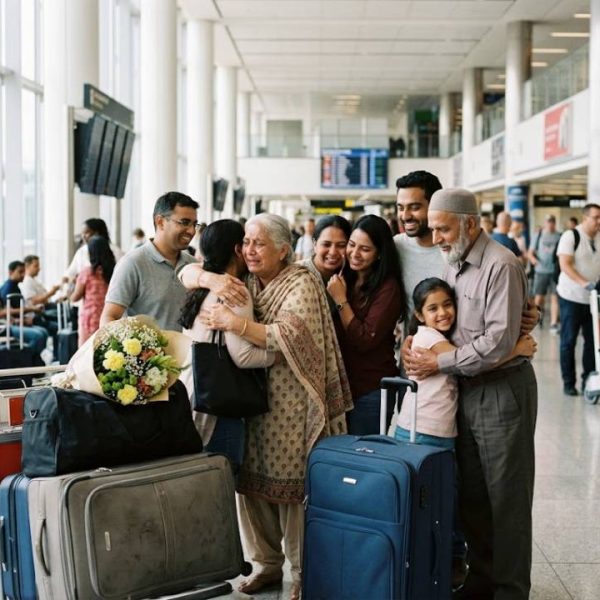
How Diasporas Shape the Countr...

Diaspora und Heimat, wie Migra...
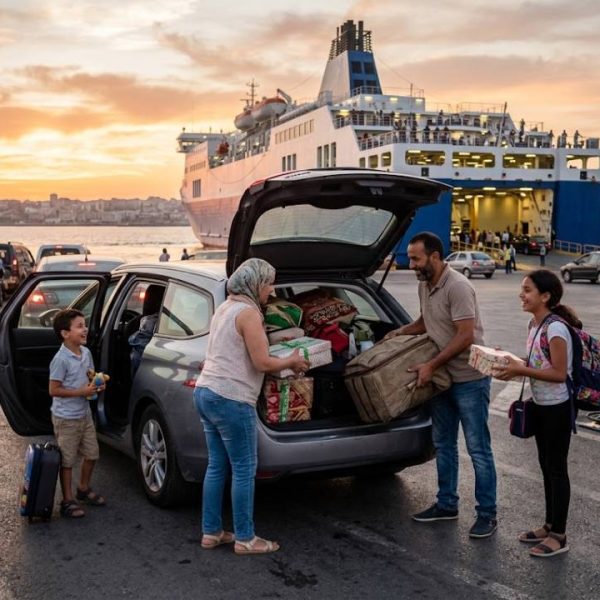
La diaspora marocaine en Franc...

Migrazione Globale E Cambiamen...

Migration Mondiale Et Son Infl...

How Fear and Discrimination Di...
Share it.

Links
We use cookies
We use cookies to give you the best online experience, remember your preferences, and understand how the site is used. You can accept all cookies, reject optional ones, or choose which categories to allow.
Privacy PolicyCookie preferences
Choose which cookies we can use. Necessary cookies stay on because the site cannot work without them.
For more details, read our Privacy Policy.